On cannabis, psychosis, and the long tail of the truth
by Alex Berenson, Unreported Truths, February 12, 2026
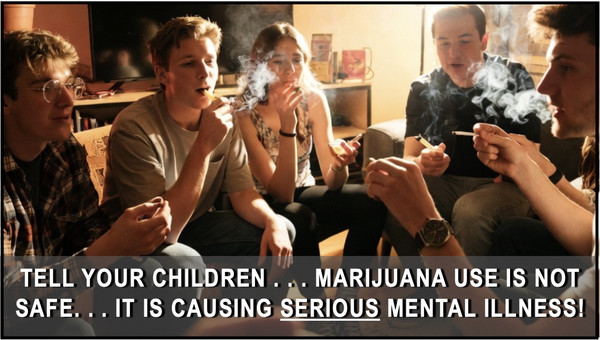
Seven years after I wrote Tell Your Children, the world - and legacy media - are waking up to the psychiatric risks of cannabis. Once again, reality smashes a fantasy of lefty journalist groupthink.
Suddenly warnings about cannabis are everywhere.
Last week, researchers reported severe mental illness has spiked in young people in Canada alongside access to high-potency cannabis.
The next day came the release of “A Killing In Cannabis,” a book about a 2019 murder in California — and the violence that plagues the marijuana business and that legalization has not resolved.
Then, three days ago, the New York Times dropped its support for full cannabis legalization. Writing that the United States has “a Marijuana Problem,” the paper admitted cannabis addiction and psychosis have become a crisis. It called for a ban on THC extracts, a move that would recriminalize much of the legal industry. (THC is the chemical in the plant that gets users high, and vapes offering near-pure hits of THC are now popular among users - and a big driver of industry profits.)
I don’t want to say I told you so.
But I did.
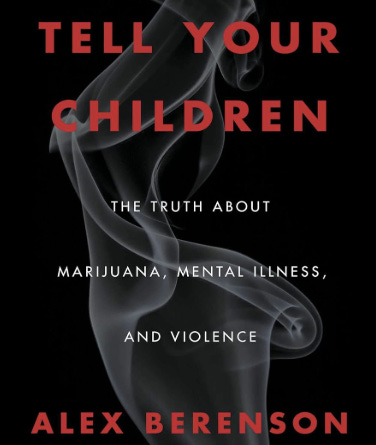
In 2019, I wrote Tell Your Children, meticulously documenting the decades of research linking cannabis and THC to mental illness, especially psychosis and schizophrenia.
The runaway legalization of cannabis risked the mental health of teens and young adults, I wrote. And cannabis advocates and companies had spent a generation pretending the drug was a medicine, not a recreational intoxicant. That marketing trick encouraged its use in the most dangerous way, for conditions like anxiety and depression by people already at high risk of mental illness.
READ: The 'Safe Marijuana' Scam is Being Exposed
When Tell Your Children came out in 2019, the industry tried to discredit it, as I’d expected.
But I didn’t expect the Times and other supposedly independent, fact-driven legacy media outlets would help them.
The Times refused to review Tell Your Children, even though I had been a reporter there for a decade and the book offered new research on an important issue. Outlets like NPR scheduled and then canceled interviews with me. The Washington Post outright attacked it, calling it a “polemic.”
As I wrote in Pandemia, the storm over Tell Your Children showed me personally just how bad the woke groupthink in the legacy media had become. Reporters at the Times believed — wrongly — many black Americans were in prison for minor cannabis-related crimes. Therefore, cannabis legalization was an issue of racial equality. Any debate over it ended there. And anyone who said otherwise was a racist.
So I took my lumps. And I waited for the truth to come out.
Now it has.
—
(Tell Your Children. You could try telling other people’s children, too, but it may not work.)
—
But why?
The wall of woke media groupthink is still mostly intact.
I suspect that the real reason people are waking up to the psychiatric harms of cannabis is that they have seen the problems for themselves — in their friends, their cousins, their siblings, and their children.
On Tuesday, conservative commentator Brett Cooper offered personal testimony to the drug’s psychiatric risks.
In a post on X, Cooper wrote she had learned that cannabis has caused her brother’s schizophrenia, the devastating brain disease, marked by episodes of hallucinations, delusions, and paranoia in its sufferers. Later, in a podcast, she did not disguise her pain as she spoke about his episodes of homelessness.
Unfortunately, Cooper’s story is all-too-typical. People rarely work, marry, or have kids. Many spend their lives shuttling through institutions and taking antipsychotic drugs that have serious side effects. The disease frequently devastates their families, too.
My mom and I have been told that my brother's psychosis - now full blown diagnosed Schizophrenia - is most likely drug induced from his years of smoking weed.
— Brett Cooper (@imbrettcooper) February 10, 2026
This drug isn't harmless, no matter what our culture and screaming people in comments sections tried to tell us. https://t.co/PMFDO0kx4v
Cooper’s post has been seen almost five million times on X.
And despite the Times’s reach and the importance of the Canadian research, her words may have more impact that anything else over the last two weeks.
First-person stories have an emotional impact that the most thoughtful editorial or research paper cannot match. As a friend of mine told me many years ago in critiquing something I’d written, People like to read about people.
We are a long way from undoing the mess of cannabis legalization and unrestrained commercialization — and President Trump’s decision in December to “reschedule” cannabis is a step in the wrong direction. (Editors Note: The WTPC Strongly Argued Against President Trump Doing So!)
But it has been clear to me for years that the fight over cannabis is fundamentally cultural and medical, not legal and political. A majority of Americans now support full legalization. Most of them do not use cannabis and do not realize how dangerous it can be, particularly for young people who use heavily.
READ: Rise in Psychiatric Disorders Linked to Increased Cannabis Use
Only when they see for themselves — or hear from people that they trust — that the industry has lied will support for legalization decrease.
That cycle seems to be starting, because the risks that I wrote about in Tell Your Children are becoming too obvious to be ignored. Even before the flurry of the last two weeks, sales were ticking up, an unusual gain for a book released over seven years ago. I can only assume that parents are seeing their teenaged and young adult children fall victim to the harms of cannabis and looking for answers.
And now, with the sudden wave of attention, Tell Your Children is out of stock on Amazon. (It will be back.)
—
(But if you can’t wait and want a signed copy, become a founding member of Unreported Truths today! Then email me to tell me you want one.)
—
What happens next?
Nothing right now.
This particular wave of attention to the harms of cannabis will fade. And the industry still has powerful momentum after decades of propaganda, paid and free, about the drug’s wonders.
But for the first time since I wrote Tell Your Children, I wonder if the pendulum is swinging back, reality is overcoming the myths so many legacy outlets have offered — and the billions spent to promote commercialization.
Only time will tell. But voices like Brett Cooper’s are hard to ignore.
Tell Your Children.
