What You Eat. What You Watch. How You Vote: The Soros-Linked Operation Studying 2.3 Million MAHA Moms
by Natalie Winters, Substack, September 18, 2026
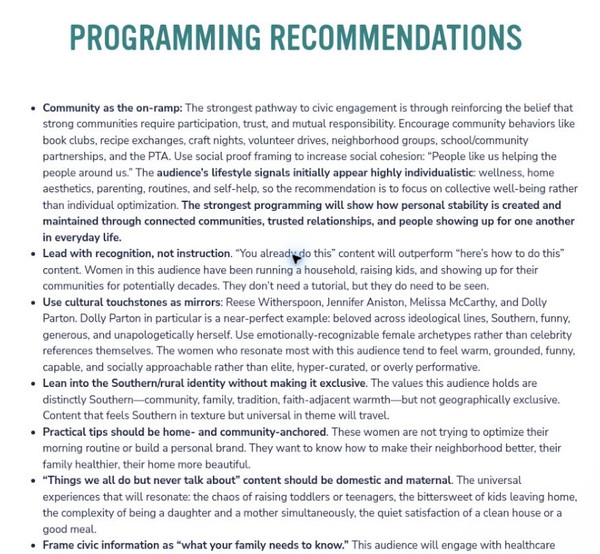
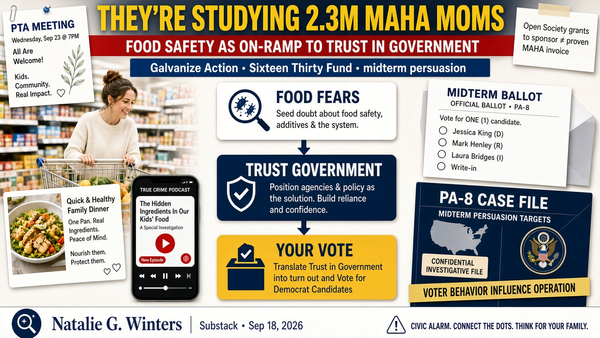
Natalie G. Winters reports that Galvanize Action — a project operating under the Soros-linked Sixteen Thirty Fund — has analyzed an audience of about 2.3 million women, mapping MAHA-adjacent beliefs and recommending how to turn healthy-food concerns into greater trust in government and progressive political behavior. A June 11 Galvanize research note she quotes states: “Our strategy of using food safety and regulation as an on-ramp to building trust in government institutions is data-validated.” Using the consumer-intelligence platform Soprism, the group studied purchasing habits, entertainment, and wellness interests (supplements, natural remedies, food sourcing) to find what feels “emotionally safe” and which “identity signals resonate.”
Recommendations reach into ordinary community life: recipe exchanges, book clubs, craft nights, school partnerships, and PTAs. Tone guidance is explicit: “Myth-busting should feel like a smart friend, not a fact-checker.” Winters frames that lifestyle research as politically consequential because Galvanize’s founding account says persuading more white women is necessary for a broader progressive coalition and describes using neuroscience, behavioral psychology, and data science to identify receptive women, connect through values, and influence civic behavior — studying cultural surroundings before delivering the political message.
A 2025 annual report says many women in the audience avoid news and get information through entertainment and social media; Galvanize reports testing more than 45 messages and advertising scripts to guide 2026 programming. An August 17 strategy update discusses control of Congress, says the audience is at least 24 percent of the vote in some competitive states and districts, and links an advertisement titled “Case File: Rob Bresnahan, Pennsylvania’s 8th.” Galvanize chose true-crime framing because that format resonates with the researched audience — entertainment preference becomes packaging for a political ad. June creator collaborations reportedly generated more than 700,000 views across 10-plus initial videos; by July the group claimed over a million people reached, highlighting grocery-price and healthcare content that directs blame for economic insecurity toward billionaires and politicians supporting tax breaks for the wealthy.