The AI Termination Ban: Why Chinese Courts Just Made It Illegal to Replace Workers with Robots
by Al Landes, The Gadget Review, April 30, 2026
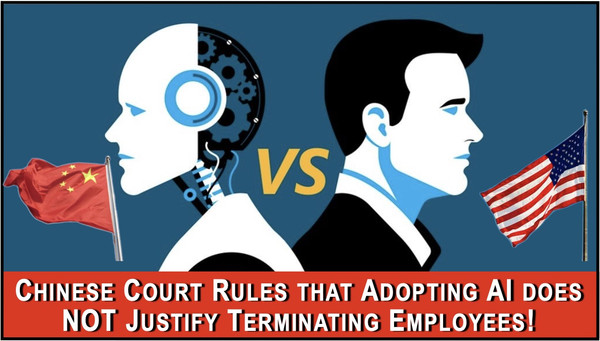
Your favorite gadgets just got more expensive to make—and that might be a good thing. Chinese courts delivered a surprising blow to tech companies betting on AI-powered cost-cutting, ruling that artificial intelligence adoption doesn’t justify terminating employees under the country’s Labor Contract Law.
The Hangzhou Intermediate People’s Court made headlines in April when it sided with a senior tech worker named Zhou, whose company tried to demote him with a massive pay cut after implementing AI systems. The court’s message was crystal clear: AI efficiency gains don’t constitute a “major change in objective circumstances” that would legally permit firing workers.
When Algorithms Meet Labor Law
The legal reasoning cuts through corporate justifications—AI implementation is a voluntary business decision, not an unforeseeable catastrophe.
This wasn’t an isolated ruling. Beijing courts had already established the precedent in December 2025, protecting a map data collector named Liu whose job was automated away. The legal reasoning cuts through corporate justifications like a hot knife through butter—AI implementation is a voluntary business decision, not an unforeseeable catastrophe like natural disasters or policy shifts.
Courts emphasized that companies choosing to automate must negotiate with employees, offer training, or provide reasonable reassignments before showing anyone the door.
What is Happening in the US as Far as Regulating AI?
The We the People Convention exchanged a series of text messages with Ohio Senator Bernie Moreno asking for an update on regulation of AI in the US Congress. He replied:
"There are a few bills going through and gaining traction. I’d suspect we get something meaningful done by the end of the year."
We responded that we need much quicker action:
"In AI time, the end of year is a year to late. Seriously, the power of these AI models and the size of these very few AI companies are growing exponentially. After the X IPO planned for June/July SpaceX will be bigger than most Nations on Earth! Can you have someone on your staff get me the text of the bills being considered and perhaps we can create some pressure to get the Senate to move on them quicker? Please do get that article about China to your colleagues and push them to pick up the pace."
We urge all Americans to contact their US Senators and US House Representatives and URGE THEM to protect American Workers and families in the coming age of AI! Click here to Contact Your Represtatives!
The Global Ripple Effect
China manufactures the bulk of consumer electronics, making these labor-protective rulings globally significant.
Here’s where your next smartphone purchase enters the picture. China manufactures the bulk of consumer electronics, from iPhones to smart home devices. These labor-protective rulings mean tech giants can’t simply slash manufacturing costs by replacing human workers with AI systems—at least not without expensive legal compliance.
Companies must now budget for:
-
Worker transitions
-
Training programs
-
Potentially higher operational costs
That expense inevitably flows downstream to consumers, but it also signals a different approach to AI integration—one that doesn’t treat human workers as disposable.
Legal experts stress that “costs of technological transformation should not be borne solely by workers.” This philosophy could influence how global tech companies approach automation, especially those heavily invested in Chinese manufacturing.
The timing feels intentional, with these rulings emerging around May 1 Workers’ Day. China is essentially telling the tech world that innovation doesn’t require sacrificing worker protections—a message that could reshape how AI gets deployed in everything from your navigation apps to smart home systems.
CLICK HERE TO READ MORE NEWS AT YAHOO FINANCE.COM
